
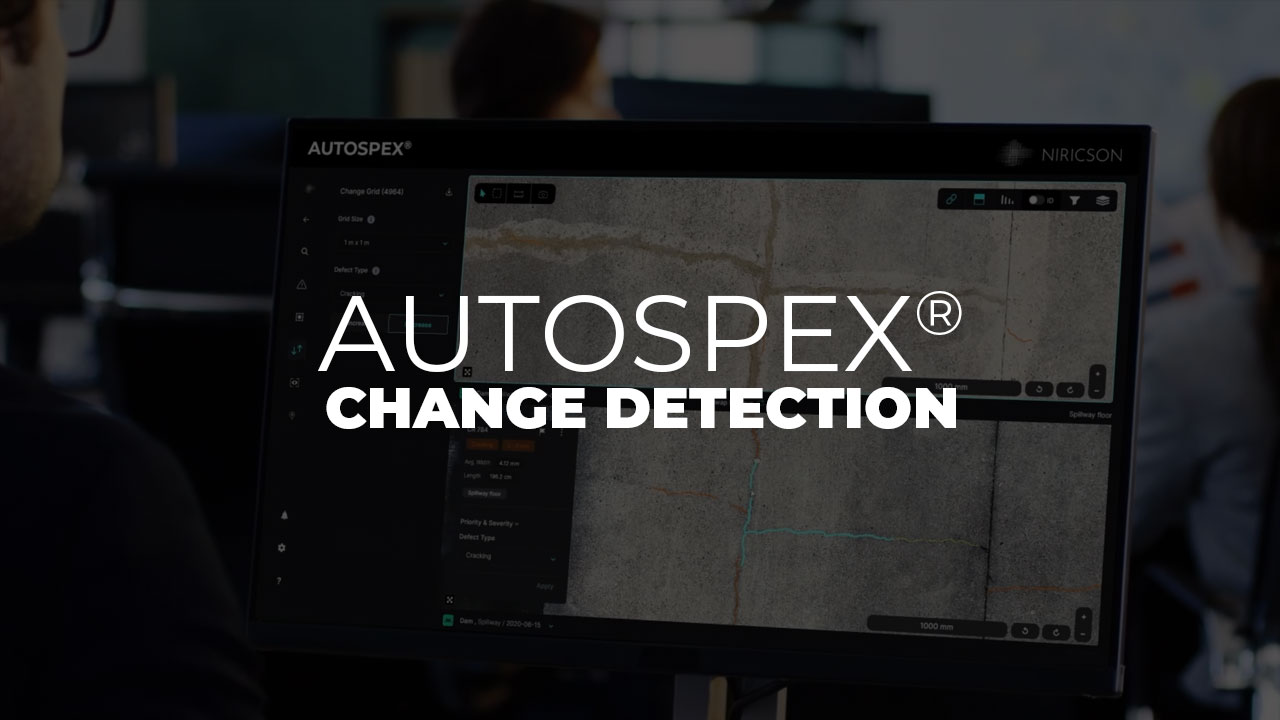
Deterioration develops gradually, often over years or decades, long before it becomes visible or disruptive.
Across dams, bridges, airfields, tunnels, and other critical assets, small changes in condition accumulate quietly. Material loss, erosion, surface degradation, and localized damage can expand, merge, or accelerate until major rehabilitation is required.
The challenge for asset owners is not simply identifying deterioration, but understanding how it changes over time and whether maintenance actions are working. This is where change detection becomes essential.
Why Change Detection Matters for Asset Owners
Traditional inspections provide valuable snapshots of condition at a specific moment. However, a single inspection cannot reveal trends, deterioration rates, or the long-term effectiveness of repairs.
Change detection shifts the focus from isolated observations to evidence-based progression. By comparing data from multiple inspections, asset owners gain insight into:
- How deterioration evolves over time
- Which areas are stable versus accelerating
- Where maintenance is effective and where it is not
- When early intervention can reduce risk and cost
This approach supports proactive asset management rather than reactive response.
A Digital Record of Deterioration
With each survey, AUTOSPEX builds a digital record of an asset’s condition. This record is cumulative, allowing owners to revisit the same structure repeatedly and understand how it behaves over time.
Rather than relying solely on qualitative notes, AUTOSPEX enables measurable tracking of deterioration. Changes can be observed and quantified across specific areas of interest, structural zones, or known problem locations.
This digital baseline becomes increasingly valuable as inspections accumulate, revealing long-term patterns and trends that inform maintenance planning.
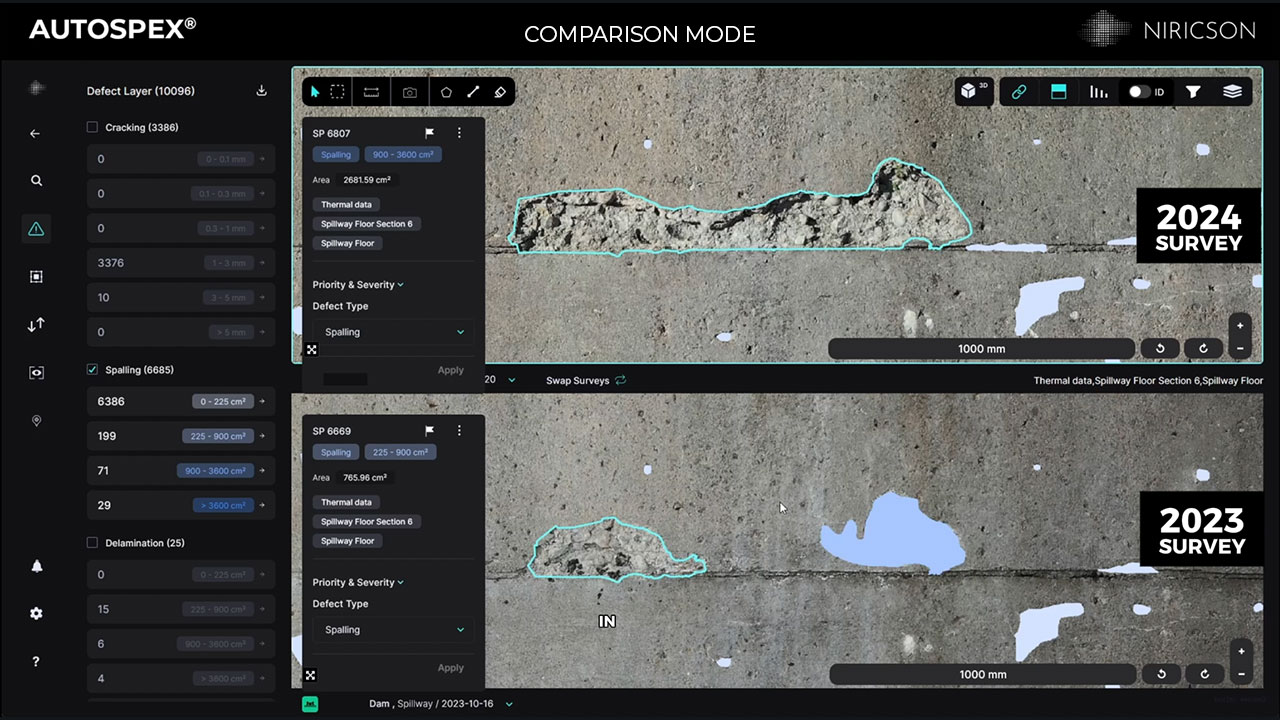
Comparing Inspections with AUTOSPEX Comparison Mode
AUTOSPEX Comparison Mode allows users to align and compare data from multiple inspections of the same asset. Surveys can be viewed side-by-side or overlaid, making changes immediately visible.
This capability applies across asset types, including:
- Concrete dams and spillways
- Bridges and elevated structures
- Airfields, runways, and pavements
- Tunnels and underground infrastructure
By comparing inspections, owners can clearly identify:
- Areas where deterioration has progressed
- Locations where new deterioration has emerged
- Zones where separate deteriorated areas have merged into larger concerns
- Sections that remain stable over time
Comparison Mode removes ambiguity and allows condition changes to be evaluated with confidence.
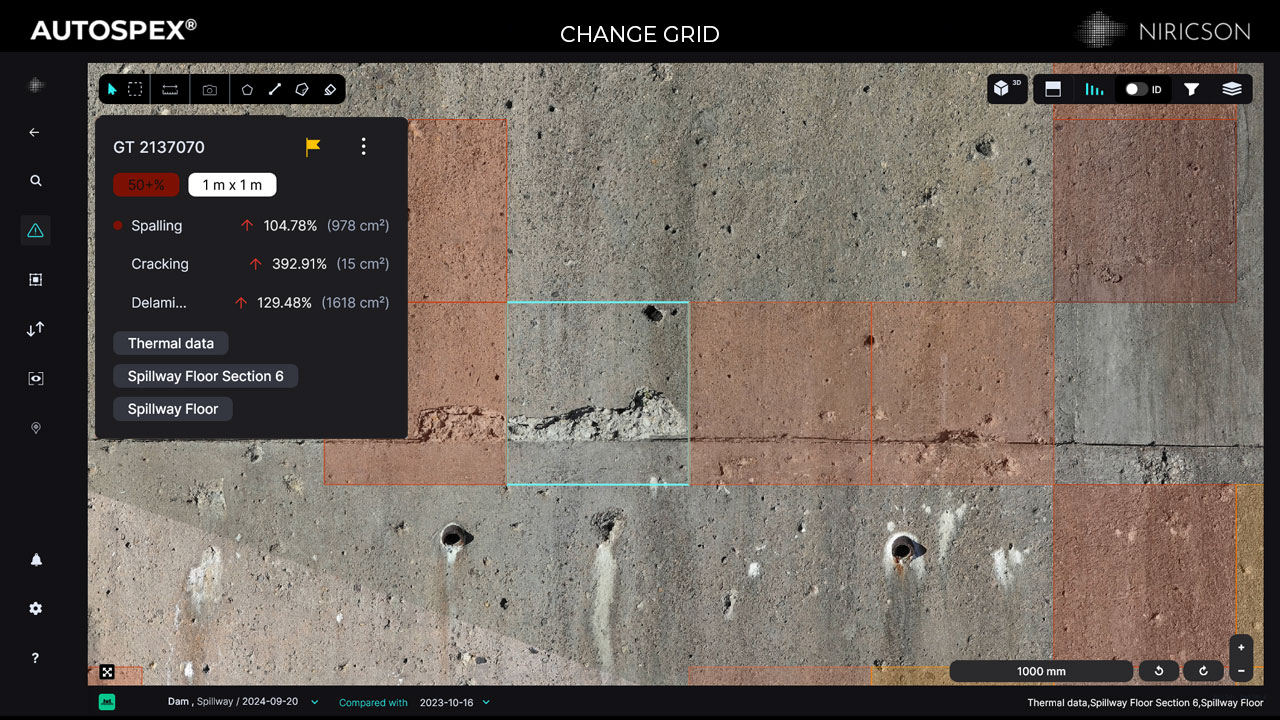
Quantifying Change with the AUTOSPEX Change Grid
While visual comparison is valuable, decision-making often requires measurable evidence. The AUTOSPEX Change Grid enables users to quantify change across inspections.
- Using the Change Grid, owners can measure:
- Growth or reduction in deteriorated areas
- Material loss or erosion over time
- Changes in severity or extent
- Progression rates across specific zones
This quantified view transforms inspection data into actionable insight, supporting prioritization, budgeting, and long-term planning.
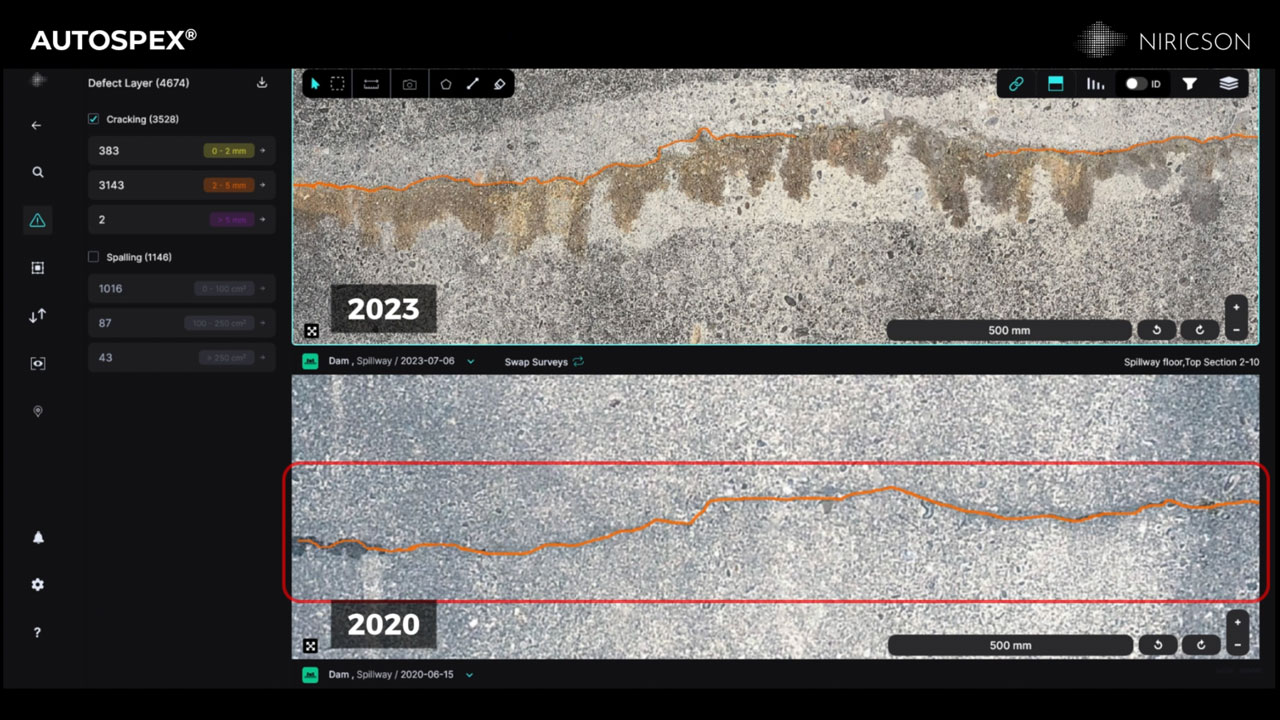
Tracking Repairs and Maintenance Performance
Change detection is not only about identifying deterioration. It also plays a critical role in evaluating maintenance and repair outcomes.
- By revisiting repaired areas in subsequent inspections, asset owners can assess:
- Whether repair materials are performing as intended
- If deterioration has slowed, stabilized, or resumed
- Whether sealants or protective systems are holding over time
This capability supports repair verification, warranty tracking, and continuous improvement in maintenance strategies across all asset types.
Supporting Proactive Maintenance Across Asset Types
Whether managing a dam, bridge, airfield, or tunnel, asset owners face similar challenges: limited budgets, competing priorities, and the need to manage risk effectively.
Change detection supports proactive maintenance by helping owners:
- Identify critical changes early
- Focus resources where deterioration is accelerating
- Reduce reliance on reactive interventions
- Extend asset life through timely, informed action
By understanding how deterioration progresses, owners can make decisions grounded in evidence rather than urgency.
Turning Inspection Data into Long-Term Insight
With repeated surveys, AUTOSPEX helps establish a reliable digital baseline for infrastructure assets. Over time, this baseline reveals trends, deterioration rates, and performance insights that support long-term asset management.
Powered by machine learning and advanced analytics, AUTOSPEX Change Detection enables asset owners to understand deterioration, verify repairs, and make confident, data-driven decisions.
Small changes do not have to become major problems.
With change detection, deterioration can be managed before it becomes risk.
